PURE SWEAT BASKETBALL
“Be strong in body, clean in mind, lofty in ideals.”
– James Naismith
Basketball is a team sport in which two teams, most commonly of five players each, opposing one another on a rectangular court, compete with the primary objective of shooting a basketball (approximately 9.4 inches (24 cm) in diameter) through the defender’s hoop (a basket 18 inches (46 cm) in diameter mounted 10 feet (3.048 m) high to a backboard at each end of the court) while preventing the opposing team from shooting through their own hoop. A field goal is worth two points, unless made from behind the three-point line, when it is worth three. After a foul, timed play stops and the player fouled or designated to shoot a technical foul is given one, two or three one-point free throws. The team with the most points at the end of the game wins, but if regulation play expires with the score tied, an additional period of play (overtime) is mandated.
Players advance the ball by bouncing it while walking or running (dribbling) or by passing it to a teammate, both of which require considerable skill. On offense, players may use a variety of shots—the lay-up, the jump shot, or a dunk; on defense, they may steal the ball from a dribbler, intercept passes, or block shots; either offense or defense may collect a rebound, that is, a missed shot that bounces from rim or backboard. It is a violation to lift or drag one’s pivot foot without dribbling the ball, to carry it, or to hold the ball with both hands then resume dribbling.
The five players on each side fall into five playing positions. The tallest player is usually the center, the second-tallest and strongest is the power forward, a slightly shorter but more agile player is the small forward, and the shortest players or the best ball handlers are the shooting guard and the point guard, who implements the coach’s game plan by managing the execution of offensive and defensive plays (player positioning). Informally, players may play three-on-three, two-on-two, and one-on-one.
Invented in 1891 by Canadian-American gym teacher James Naismith in Springfield, Massachusetts, United States, basketball has evolved to become one of the world’s most popular and widely viewed sports.[1] The National Basketball Association (NBA) is the most significant professional basketball league in the world in terms of popularity, salaries, talent, and level of competition.[2][3] Outside North America, the top clubs from national leagues qualify to continental championships such as the EuroLeague and the Basketball Champions League Americas. The FIBA Basketball World Cup and Men’s Olympic Basketball Tournament are the major international events of the sport and attract top national teams from around the world. Each continent hosts regional competitions for national teams, like EuroBasket and FIBA AmeriCup.
The FIBA Women’s Basketball World Cup and Women’s Olympic Basketball Tournament feature top national teams from continental championships. The main North American league is the WNBA (NCAA Women’s Division I Basketball Championship is also popular), whereas the strongest European clubs participate in the EuroLeague Women.
HISTORY
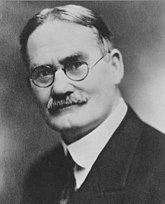
Dr. James Naismith, who invented basketball in Springfield, Massachusetts in 1891
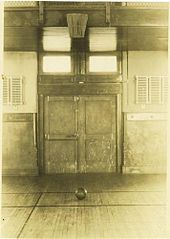
The first basketball court: Springfield College
In December 1891, James Naismith, a Canadian professor of physical education and instructor at the International Young Men’s Christian Association Training School (now Springfield College) in Springfield, Massachusetts,[4] was trying to keep his gym class active on a rainy day.[5] He sought a vigorous indoor game to keep his students occupied and at proper levels of fitness during the long New England winters. After rejecting other ideas as either too rough or poorly suited to walled-in gymnasiums, he invented a new game in which players would pass a ball to teammates and try to score points by tossing the ball into a basket mounted on a wall. Naismith wrote the basic rules and nailed a peach basket onto an elevated track. Naismith initially set up the peach basket with its bottom intact, which meant that the ball had to be retrieved manually after each “basket” or point scored. This quickly proved tedious, so Naismith removed the bottom of the basket to allow the balls to be poked out with a long dowel after each scored basket.
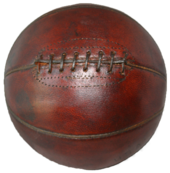
Old style basketball with laces
Basketball was originally played with a soccer ball. These round balls from “association football” were made, at the time, with a set of laces to close off the hole needed for inserting the inflatable bladder after the other sewn-together segments of the ball’s cover had been flipped outside-in.[6][7] These laces could cause bounce passes and dribbling to be unpredictable.[8] Eventually a lace-free ball construction method was invented, and this change to the game was endorsed by Naismith. (Whereas in American football, the lace construction proved to be advantageous for gripping and remains to this day.) The first balls made specifically for basketball were brown, and it was only in the late 1950s that Tony Hinkle, searching for a ball that would be more visible to players and spectators alike, introduced the orange ball that is now in common use. Dribbling was not part of the original game except for the “bounce pass” to teammates. Passing the ball was the primary means of ball movement. Dribbling was eventually introduced but limited by the asymmetric shape of early balls.[dubious – discuss] Dribbling was common by 1896, with a rule against the double dribble by 1898.[9]
The peach baskets were used until 1906 when they were finally replaced by metal hoops with backboards. A further change was soon made, so the ball merely passed through. Whenever a person got the ball in the basket, his team would gain a point. Whichever team got the most points won the game.[10] The baskets were originally nailed to the mezzanine balcony of the playing court, but this proved impractical when spectators in the balcony began to interfere with shots. The backboard was introduced to prevent this interference; it had the additional effect of allowing rebound shots.[11] Naismith’s handwritten diaries, discovered by his granddaughter in early 2006, indicate that he was nervous about the new game he had invented, which incorporated rules from a children’s game called duck on a rock, as many had failed before it.
Frank Mahan, one of the players from the original first game, approached Naismith after the Christmas break, in early 1892, asking him what he intended to call his new game. Naismith replied that he hadn’t thought of it because he had been focused on just getting the game started. Mahan suggested that it be called “Naismith ball”, at which he laughed, saying that a name like that would kill any game. Mahan then said, “Why not call it basketball?” Naismith replied, “We have a basket and a ball, and it seems to me that would be a good name for it.”[12][13] The first official game was played in the YMCA gymnasium in Albany, New York, on January 20, 1892, with nine players. The game ended at 1–0; the shot was made from 25 feet (7.6 m), on a court just half the size of a present-day Streetball or National Basketball Association (NBA) court.
At the time, football was being played with 10 to a team (which was increased to 11). When winter weather got too icy to play football, teams were taken indoors, and it was convenient to have them split in half and play basketball with five on each side. By 1897–1898 teams of five became standard.
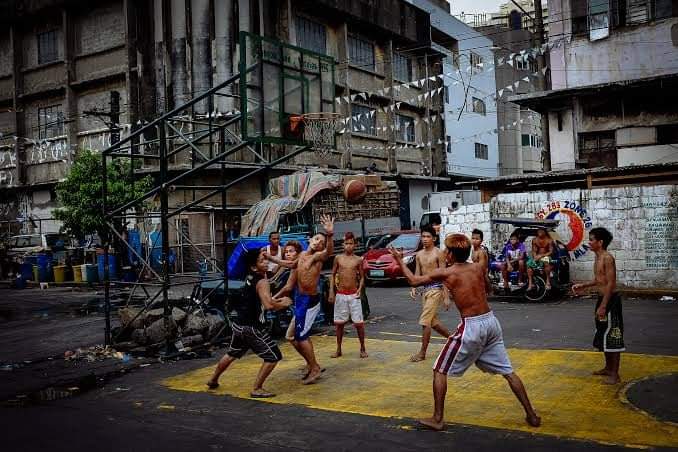
To these generation, Basketball is the most influential of all the sports here in Philippines because in these late year. You can play basketball even at home or even in your area. You just need to have ball and a ring then there it is! You have a basketball court. Sorry, I meant half basketball court. But when do the basketball started and who started basketball?
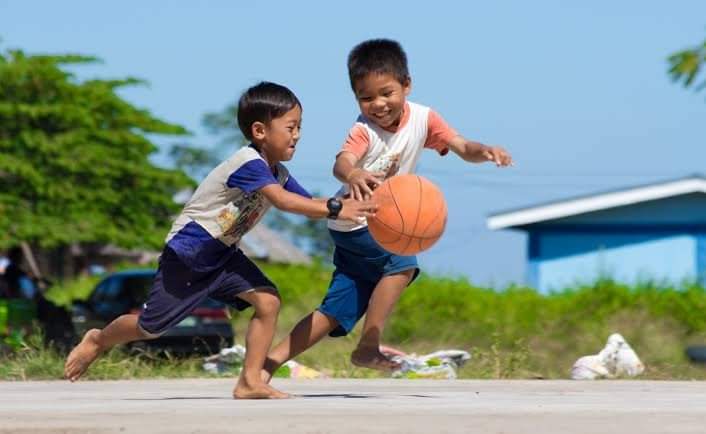
Did you know that basketball was introduced by the American colonial period in the Philippines with the first American teachers?
Yes, it is true that the American colony is the most influential country around late 1900. This was brought along with baseball through YMCA and the school systemDid you know that basketball is only for women’s sport in 1910 and was played in the interscholastic meets in 1911 and 1913?
Basketball is sport for female only but the Catholic Church that female playing basketball is inappropriate because this time skirts were allowed to be worn above bloomers female players because of that volleyball became the more preferred sports among Filipino women.
The first men’s national team organized in the 1910s won the first far eastern championship games in 1913 and it won a gold medal. So the National Collegiate Athletic Association (NCAA), which had basketball as its main sport, was established in 1924.
So what can we say? Basketball became our popular sports right now, even the kids around 6 – 10 years old has already know the trick in dribbling or shooting the ball.
You can tell to their faces that they are very happy in playing it. In fact, even they been hurt or have an injury. They still want to play and give everything they want.
From my experience, I started playing basketball around 9 years old and at the same time I learning both basketball and art. Playing basketball in our street just a small half court ring and small ball. Playing it makes me happy even though I’m very tired at the end. The sweat the adrenaline that makes you move all your body part at the same time. The fact that you hold the ball until it you shoot it on the ring. That’s the happiest time in your life. Even I tried to not play my body act on their own.
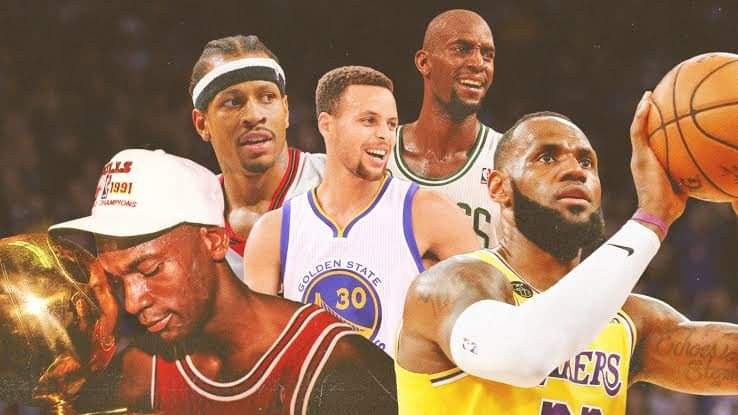
Basketball is really the most influential sports of all. You can say that everyone what’s to be like NBA players like Kobe Bryant, Lebron James, Kyrie Irving or even Steph Curry. As of now this is the most influential people in NBA. So kids right now watch a basketball tutorial like how to dribble faster, increase their shooting range or even how to jump higher.
Other people make fortune out of this sports. You may know the Filipino version of NBA. PBA or Philippine Basketball Association is a well-known in the Philippines. Many Passionate Ballers does not continue their degree because of basketball. Basketball influence them so much that it became there work. Some college players became a UAAP players and PBA players recruited by different Teams.
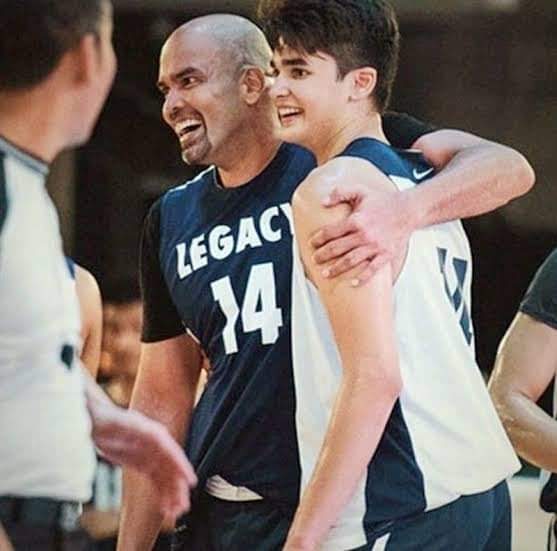
You should have heard Kobe Paras? Son of well-known Benji Paras?
This boy loved the basketball so much that he take what his father left behind. After he graduated high school. There are international college school came looking for him. They invited Kobe Paras to play in there school. So who would not grab this awesome opportunity? So because of that. Kobe Paras became a well-known Basketball Player not only in the Philippines but international too.
You can say that this basketball is what people like and 8 out of 10 people like it or playing it. So what can we say? If you haven’t tried playing it. You must try, moved that muscle of your and play the most influential sports and feel what other people feel in basketball.

Basketball was introduced in the Philippines during the American colonial period with the first American teachers teaching the sport along with baseball through the YMCA and the school system.[1] Basketball was first introduced to the Philippine public school system by the Americans as a women’s sport in 1910 and was played in Interscholastic meets in 1911 until 1913. Women’s basketball met opposition from conservative groups, particularly the Catholic Church who view bloomers worn by women basketball players as inappropriate. By the time skirts were allowed to be worn above bloomers as a compromise, women’s basketball was already in decline and was only played in provincial and local interscholastic meets. Indoor softball and as well as volleyball became the more preferred sport for Filipino women.[2]
The first men’s national team – organized in the 1910s – won the first Far Eastern Championship Games in 1913. In all but one of the ten editions of the games, the national team won the gold medal.[1]
The National Collegiate Athletic Association (NCAA), which had basketball as its main sport, was established in 1924.[1]
The Philippines became a member of FIBA through the Basketball Association of the Philippines in 1936.[citation needed] The Philippines made their debut in the Olympic Games in 1936 where they finished fifth, the best result of an Asian team in Olympic basketball history. In the same year, the first basketball stamp in the world was released by the country. The first commercial league was the basketball tournament of the Manila Industrial and Commercial Athletic Association (MICAA) which was established in 1938.[1]
The Philippines became an independent country in 1946, and in the 1950s, the national team did well in international tournaments. The Philippine team won the gold medal at the Asian Games in 1951, the first-time basketball was played.[3] The Philippine basketball team dominated the Asian Games until 1962.[3] In the 1954 FIBA World Championship the Philippines placed third, winning the bronze medal, the best performance by an Asian team in the World Championship.
After missing the first FIBA Basketball World Cup (known through 2010 as the FIBA World Championship) that was held in 1950 in Argentina, the Philippines participated in the 1954 FIBA World Championship held at Rio de Janeiro, Brazil. The Philippines finished with a 5–2 win-loss record in the Final Round games, and captured the bronze medal. The third place-finish is still currently the best finish by an Asian country in the World Cup. Carlos Loyzaga finished as the world tournament’s third leading scorer (148 points/16.4 points per game) and was named in the FIBA World Mythical Five Selection.
In the 1960s, the first FIBA Asia Championship was won by the Philippines with Carlos Badion as the tournament’s Most Valuable Player.
Meanwhile, the Philippines won the right to host the third FIBA World Championship, but were suspended after then-President Diosdado Macapagal, father of former President Gloria Macapagal-Arroyo, refused to issue visas to players from communist countries (notably basketball powerhouse Yugoslavia and the Soviet Union).
The Philippines’ dominance in sport waned after Carlos Loyzaga’s retirement, and had performed poorly in the Olympic games where the national team was unable to break into top-10 positions. However, the country continued to play competitively in the Asian and World Championships.
The commercial league model pioneered by the MICAA continued with the Philippine Basketball Association (PBA) in 1975 and the Philippine Amateur Basketball League (PABL) in 1983. The PBA is the first professional basketball league in Asia and the second oldest in the world after the NBA.[4] The league’s regulations are a hybrid of rules from FIBA and the NBA. The league was inaugurated on April 9, 1975.[5] The PABL was established to fill the void created after the collapse of the MICAA in 1981.
In 1978, the Philippines hosted the FIBA World Championship, marking the first time that the international tournament was held in Asia.
The Philippines was suspended by FIBA in 2005 due to a leadership crisis which affected the former national basketball association of the country – the Basketball Association of the Philippines.
In 2007, the Samahang Basketbol ng Pilipinas became the newly-recognized national basketball body for the Philippines by FIBA.
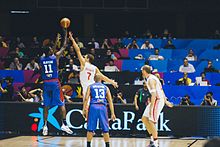
The men’s national team (blue) playing against Croatia (white) at the 2014 FIBA World Cup.
Senior
Men’s (in FIBA club tournaments)
Women’s
Men’s 3×3
Men’s wheelchair
Youth
Boys’ under-19
Girls’ under-19
Boys’ under-17
Girls’ under-17
Universiade

PBA game in the Araneta Coliseum
Men’s Edit
Professional
Philippine Basketball Association (since 1975)
ASEAN Basketball League (since 2009)
National Basketball League (since 2018)
Semi-Professional
Maharlika Pilipinas Basketball League (since 2017)
Amateur
PBA Developmental League (since 2011)
UNTV Cup (since 2013)
Metro League (since 2018)
Community Basketball Association (CBA-Pilipinas) (since 2019)
Collegiate
Philippine Collegiate Champions League (since 2002)
NCAA Basketball Championship (since 1924)
UAAP Basketball Championship (since 1938)
Cebu Schools Athletic Foundation, Inc.(since 2001)
National Athletic Association of Schools, Colleges and Universities (since 2001)
National Capital Region Athletic Association (since 1993)
Filoil Flying V Preseason Premier Cup (since 2006)
Universities and Colleges Basketball League (since 2016)
Father Martin Cup (since 1994)
Defunct
Manila Industrial and Commercial Athletic Association (1938–81)
Metro Manila Tiong Lian Basketball Association (1971–2013)[6]
Philippine Basketball League (1983–2011)
Metropolitan Basketball Association (1998–2002)
Mindanao Visayas Basketball Association (2006–08)
United Regional Basketball League (2004–05)
National Basketball Conference (2004–08)
Liga Pilipinas (2008–11)
Pilipinas Commercial Basketball League (2015–16)
Filsports Basketball Association (2015–16)
Country-Wide Basketball League (2016)
Women’s Edit
Professional
Women’s National Basketball League (since 2019)
Amateur
Pinay Ballers League (since 2014)
3×3 Edit
Semi-Professional
Chooks-to-Go Pilipinas 3×3 (since 2019)
 Site Title